
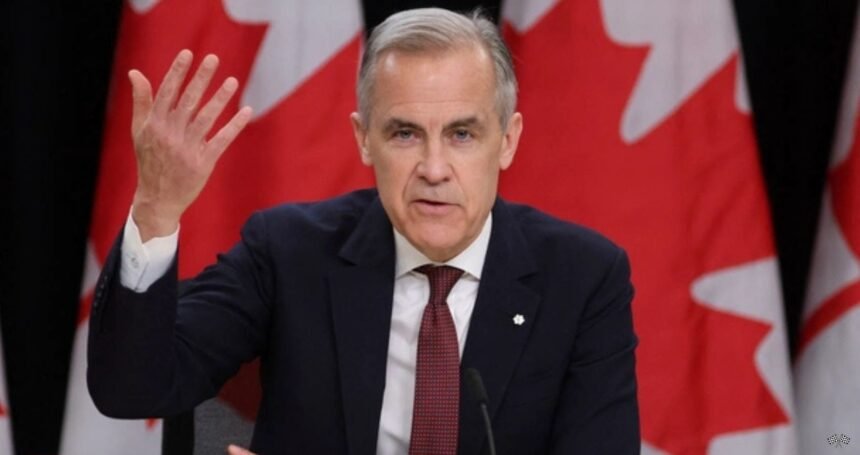
Prime Minister Mark Carney is moving his economic agenda from podium to pavement with a $400 million package for the City of Ottawa that targets housing supply, public safety and the capital’s role in global diplomacy.
The suite of measures was announced on Monday in Ottawa and the main part of it is a plan to build up to 3,000 new mixed income and affordable homes starting in 2026. It is framed as a response to changing global trade conditions that have made life hard for Canadian families and businesses.
The announcement is mostly about a new partnership between the City of Ottawa and the federal housing agency Build Canada Homes.
The deal calls for as many as 3,000 units to be built across the city out of which 2,000 will be built on federal land and the other 1,000 will come from the city’s existing project pipeline and be paid for by the federal agency.
Municipal officials are expected to speed up approvals and cut or waive some development charges, permit fees and property taxes in return for federal support, effectively turning public land and local regulatory levers into equity in the deal.
More Read

The federal contribution will run through Build Canada Homes, a housing agency launched in September with a mandate to expand the stock of affordable units by using public land, concessional financing and factory style construction methods.
Ottawa’s projects are expected to lean on that model while also observing a new Buy Canadian policy that steers builders toward domestic lumber and other locally produced materials.
For contractors and suppliers, the combination of low cost federal land and guaranteed demand for Canadian inputs signals a pipeline of work that could extend well beyond the first wave of projects.

Carney’s office cast the Ottawa agreement as an example of how the federal government intends to respond to what it describes as massive disruptions in the global trading system.
The prime minister has argued that Canada needs a different economic playbook as tariffs and industrial policies in major markets shift the terms of trade.
This has meant pairing national ambitions, such as more resilient supply chains with very local deals that translate into cranes on specific sites and contracts for specific firms.
The federal government also pledged more than $1.2 million for a pilot project to tackle substance use in Ottawa, funding that will flow to the city and the Canadian Centre on Substance Use and Addiction.
The project is designed to test community based initiatives that reduce crime, discourage drug use and build life skills, while a parallel research effort will map gaps in the local system and recommend ways to coordinate health, policing and social services.
The federal government and the city plan to identify new projects that draw on Ottawa’s network of more than 300 defence companies, leveraging rising military spending and new international commitments.
More Read

Carney’s government has already approved a pay raise for all members of the Canadian Armed Forces and earmarked $9 billion in additional defence spending this year alongside Canada participation in the European Union’s SAFE initiative for joint defence procurement.
Carney used the event to confirm that Canada will submit a bid to host the 2028 Sommet de la Francophonie in the National Capital Region.
The Francophonie grouping represents about one fifth of global economic output, and hosting its summit would bring heads of state, senior officials and business delegations from across the French speaking world to Ottawa and Gatineau.
In a prepared statement, Mark Carney said the agreements with the city would build more homes, protect our communities and catalyse new opportunities, presenting the package as a model of what he has called partnership driven nation building.
Mark Sutcliffe, the mayor of Ottawa, described the housing component as a historic investment in affordability and argued that aligning city and federal priorities can make the capital safer and more attractive to residents and employers alike.
The Ottawa deal lands as Carney’s minority Liberal government tries to balance ambitious promises with fiscal restraint.
Finance Minister François Philippe Champagne asked departments to identify operational savings of about 15% by 2029, a target that will require difficult trade offs as new spending on housing, defence and social programmes comes on line.
If Ottawa can convert federal land into thousands of completed homes, translate a small safety pilot into lower crime and position its defence and French language assets for global partnerships, it will strengthen Carney’s argument that a turbulent trading world rewards countries that align housing, industry and foreign policy around their major cities.