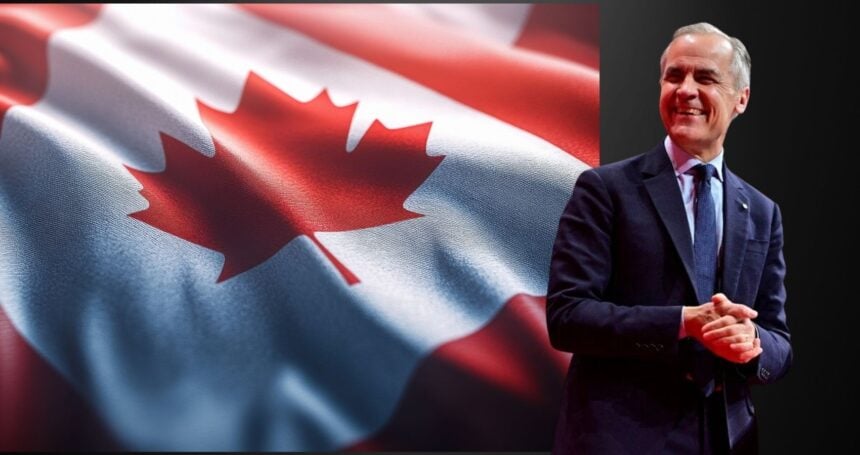
Mark Carney, the Prime Minister, said that Canada would spend $80.3 million to strengthen critical mineral supply chains. He said this was part of Canada’s larger effort to get the materials it needs for clean energy technologies and protect itself from geopolitical shocks.
The package, which was announced at the G7 summit in Kananaskis, includes targeted support for domestic research and international partnerships that want to move ideas from the lab to the plant floor and find new places for Canada to buy and sell important materials.
The department said that Arianne Phosphate got conditional approval for up to $735,000 from the Critical Minerals Research, Development and Demonstration program to improve the processing of phosphate rock from its Lac à Paul site and make phosphoric acid purification more efficient.
If the work is successful on a large scale, it could lead to a Canadian source of phosphorus for lithium-iron-phosphate batteries. Last year, Ottawa said that phosphate was a vital mineral.
The plan for $80.3 million has three parts. The biggest part, $50.3 million over three years, supports new ideas to protect global critical mineral supply chains.
More Read

This includes domestic research and development that fills in processing gaps and working with G7 partners.
A second stream sends $20 million over two years to a partnership called Resilient and Inclusive Supply Chain Enhancement. This partnership helps developing economies get more value from the minerals they produce.
The last $10 million over two years will be used to help emerging markets build their capacity through training and technical help.

The government has said that these steps are meant to “level the playing field” when markets are purposefully messed with.
The first sign is a shift in policy toward resilience in the upstream and midstream sectors, not just megadeals at the plant level.
Grants from the research and demonstration program are usually smaller and easier to use, which can speed up the process of turning technologies in beneficiation, refining, and recycling from pilot projects to commercial use.
The first award in Quebec shows that battery chemistry is flexible because LFP cells are becoming more popular in mass-market electric vehicles and grid storage.
The approach also fits with the ongoing reforms to the permitting and delivery process that began in September when Carney named the first projects for Canada’s Major Projects Office.
These reforms are meant to help move important energy and mining files through the system more quickly.
More Read

Ottawa’s battery strategy includes a lot of incentives for making cells and protecting the supply chain. This is important as Canada changes its EV rules and trade exposure.
The government put the EV mandate on hold earlier this year while it looked at jobs and competitiveness. This made people pay more attention to costs and inputs.
Copper, nickel, graphite, and now phosphate are at the center of that debate, which is similar to the policy arguments about what Ottawa sees as the backbone of electrification.
Junior miners and process innovators that can show lower carbon flowsheets or secureft supplies may have the best chance of getting funding.
Mid-tier producers with the ability to grow could become less risky if the R&D grants close technology gaps that have made it hard to get permits or money.
Recent events, like the merger of Teck and Anglo, kept copper in the news. At the same time, capital allocators have created funds like Sprott’s active metals and miners fund to take advantage of a possible upcycle.