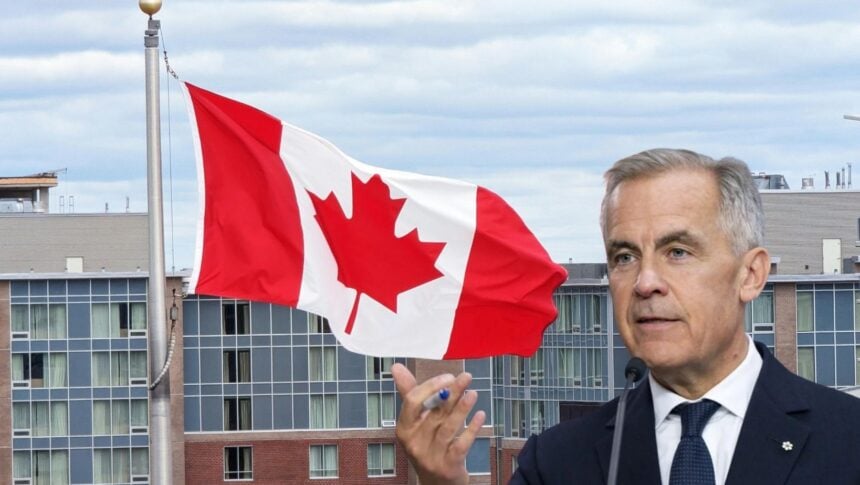
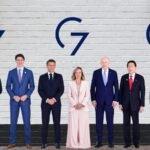
This week in New York, Canada took a stronger stance on security and the economy. Prime Minister Mark Carney used the 80th United Nations General Assembly to call for stronger trade ties, energy partnerships, and multilateral action on crises from Ukraine to Haiti.
Ottawa called the moment a turning point for the world system and a chance for Canada to make new connections in an official news release.
The government announced $207 million in new international aid to improve children’s nutrition, climate resilience, and biodiversity. This is part of an effort to turn diplomatic outreach into real programs.
Ottawa also set aside $60 million to help stabilize Haiti, with $40 million going to security and $20 million going to fight transnational organized crime in the area.
Carney’s team connected the promises of development to a business case for Canadian companies.
More Read
The prime minister’s schedule focused on talks in Asia, Africa, Europe, Latin America, and the Caribbean. Ottawa stressed the need to “fast-track nation-building projects” and open up new export markets.
The pitch fits with Canada’s goal of finding new demand centres and reliable supply chains for clean technology, agri-food, and services, even though growth is slowing for its traditional partners.
Security policy was a big part of the meeting. Carney co-chaired a session with Ukrainian President Volodymyr Zelenskyy on bringing children back to Ukraine and helping them get better.

The government also said that Canada has given Kyiv almost $22 billion in different kinds of support since 2022.
The prime minister was also supposed to speak at a leaders’ forum on development finance on September 24.
This was a follow-up to Canada’s announcement of $391.3 million to get private capital for projects in emerging markets at the G7 meeting in Kananaskis in June.
During UN week, Canada formally recognized the State of Palestine and promised more than $47 million in new funding for governance, justice, and economic resilience in the West Bank and Gaza. This was part of Ottawa’s push for a change in Middle East policy.
Carney asked for an immediate ceasefire in Gaza, the release of all hostages, and the protection of civilians. This made Canada a supporter of a negotiated two-state solution.
A detailed backgrounder explains how the money will be used, such as for UNICEF’s Child Nutrition Fund, climate adaptation programs in the Sahel and Iraq, and projects that promote women’s participation, press freedom, and fair elections.
More Read
The package also includes help for small and medium-sized exporters in developing markets, which shows that making trade easier is still a key part of Canada’s development strategy.
Carney said that the posture was values in service of interests.
He said that Canada’s leaders should be judged by “the value of our strength.” This is a phrase that sums up the government’s efforts to turn diplomatic capital into economic opportunity for Canadian workers while also protecting everyone’s safety.
Anita Anand, the foreign minister, said that the week showed that Canada wants to take the lead in a troubled multilateral system.
The message is that Ottawa is looking for markets and partners outside of North America and is focusing on multilateral projects that can open up blended-finance opportunities.
Canadian companies could see project pipelines grow over time in areas like clean energy services, agri-tech, and infrastructure.
This is because of development promises aimed at climate resilience and supply-chain capacity, as well as working with partners in Africa and the Caribbean.
The commitment to Haiti and support for Ukraine also show that there will still be a need for security, rebuilding, and humanitarian logistics.
As always, execution will decide if the headline numbers turn into contracts and deals that can be invested in.