
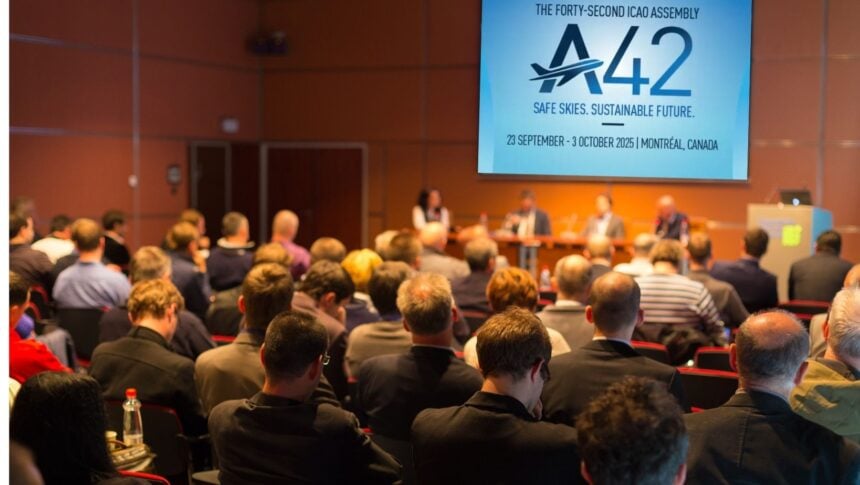
As the 42nd Assembly of the International Civil Aviation Organization began this week in Montréal, Canada used home ice to set the stakes for commercial aviation.
Steven MacKinnon, Canada’s Minister of Transport and Leader of the Government in the House of Commons, spoke to delegates at the beginning and said that aviation is a driver of economic growth that still has to deliver on safety, security, sustainability, and accessibility.
In an official press release from Transport Canada, he asked for cooperation on new technologies and said that Canada would “champion the highest standards of safety and security” while keeping aviation a bridge between people, countries, and economies.
The assembly, which is taking place in Montréal until October 3, sets ICAO’s goals for the next three years.
That matters to airlines, airports, and manufacturers because the body’s rules and advice affect national regulators and business investment plans.
More Read

Canada has brought up issues like safer skies, stronger networks, better access for disabled travellers, and a more environmentally friendly path for emissions.
Those goals are both political and financial for carriers who are dealing with full schedules, crowded infrastructure, and rising costs of going green.
Canada has been the host country of the UN agency since 1947, and it is using its convening power more and more.
More Read

ICAO has 193 member states, and its headquarters in Montreal is in the middle of an aerospace cluster that includes OEMs, engine makers, MRO providers, airport operators, and a growing number of companies that make sustainable aviation fuel.
For the local economy, two weeks of ministerial meetings, bilateral sessions, and industry lobbying mean hotel nights and business deals.
The agreements made here often become the basis for national rules that affect what airlines buy, how they fly, and what travellers experience in the larger market.
MacKinnon’s comments also brought up accessibility, which is becoming a bigger issue as regulators raise the bar for both ground handling and cabin experience.
Signals about how harmonized approaches could affect the layout of aircraft interiors, retrofits, and turnaround times.
Any progress toward common standards usually makes it easier for network carriers and lessors to follow the rules in different countries. This is good for them because they have to manage fleets in different places.

Every policy conversation has a long-term goal of sustainability.
The assembly is not a market forum, but it can help businesses with their strategies and purchases by giving them information on lifecycle accounting, recognizing sustainable aviation fuel, and new technologies.
If ICAO members push for clearer SAF frameworks, it could make it easier for fuel producers to see how much fuel they will need and lower the risk for airlines that are testing multi-year supply agreements.
Investors would also be able to compare decarbonization claims across carriers more easily if there were clear rules for measurement and verification.
Safety and security are still the license to operate. Operators now have to deal with cyber resilience and navigation integrity as well as traditional risk management.
Even small steps toward aligned practices can cut down on duplication and make incident response more effective. That is especially true for airports and ANSPs that are upgrading their systems while dealing with more traffic and not having enough staff.
Canada’s argument that aviation is an engine of prosperity appeals to both cargo operators and tourism hubs. Travel across borders is back on the rise, but service levels and supply chains are still catching up.
Policy that makes it easier for regulators to work together and cuts down on procedural friction can free up capacity without building new runways.
The assembly’s value isn’t in big announcements; it’s in the slow work of making rules that help airlines and manufacturers plan with more confidence.
In the next few days, transport ministers, regulators, and industry groups will meet to test ideas and get support.
The outcome won’t change quarterly results on its own, but it will set the tone for how things will work as carriers finish their budgets for 2026, OEMs plan their production slots, and airports think about their capital plans.
The tells will be in the communiqués and the follow-up, how quickly national regulators turn advice into rules and whether industry groups can turn technical agreement into solutions that can be used by a lot of people.
Canada, on the other hand, is saying it wants to keep Montréal at the centre of that process.
The host’s message is clear. Keep safety and security at the centre, make it easier for more people to get to, and use new ideas to grow aviation without leaving countries or customers behind.
If that agenda gets more support, it will help the sector’s next phase have a more stable policy runway.