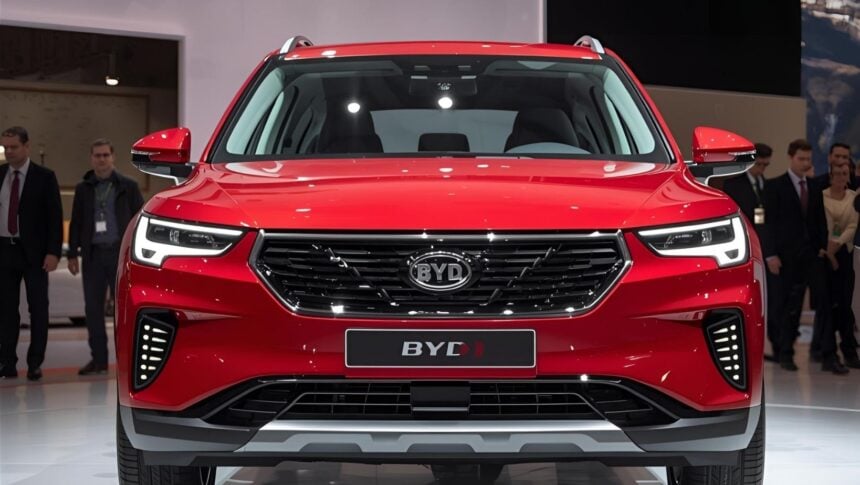
BYD is strengthening its German business after a slow summer for sales by hiring four new managers to make it easier for businesses and retail customers to buy from them.
Christian Lochner, a former executive at Fiat Chrysler and Mitsubishi Motors, will be in charge of key accounts and fleet support. Birk Pfennig, who used to work for Hyundai and Volkswagen’s Seat brand, will be in charge of retail sales.
The moves come after a slowdown in recent months and are meant to get things moving again in the bloc’s hardest market. The push to hire more people is part of a management change that is already happening.
In June, BYD named Lars Bialkowski, a veteran of the industry, as country manager for Germany. This showed that the brand wants to make decisions more locally and speed up dealer development.
Last year, BYD hired Maria Grazia Davino, who used to be Stellantis’s UK chief, as the regional managing director for Germany and a few nearby markets.

This was part of a larger effort to build up European leadership, which also included hiring former Fiat Chrysler dealmaker Alfredo Altavilla as a senior adviser.
Germany is important for more than just its size. A rise in electric vehicle registrations across the European Union has opened the door for competitors who can offer a good range and charging performance at a competitive price.
This summer, BYD briefly overtook Tesla in EU sales. This was due to a shift in the market that favoured plug-in hybrids and battery electrics. BYD is also gaining ground in Spain with cheaper EVs as it quickly expands.
More Read

Germany has a lot of brand loyalty and crowded showrooms, so BYD’s new hires are focused on fleet tenders and retail execution on the ground.
Fleet is the fastest way to get things done in Germany. Corporate and public-sector buyers place big orders, set expectations for residual value, and often decide which brands people see on the road.
Lochner’s job is to handle key accounts and dealer support, which shows that the company wants to win more of those tenders. Pfennig’s job is to improve showroom throughput and conversion.
BYD is also working to make financing and service easier to get. This spring, it expanded its leasing partnership with Ayvens in Europe to cover more markets. This is a model that German fleets are already familiar with.
The company is also making its industrial footprint more local. BYD is making cars in Hungary and has plans for a second assembly site in Turkey.
Senior advisors say that local battery production will be needed to fully support production and logistics in Europe.

That could help ease the pain of tariffs and shipping costs, which is becoming more important as price competition heats up.
BYD’s German reset isn’t a big deal; it’s a practical way to improve distribution and fleet penetration in a country that shapes how people in Europe buy things.
Success would build on the brand’s recent gains in market share across the EU and give it a stronger base before it starts making things locally.
If they fail, it will show how hard it still is for new companies to get into Germany’s dealership networks and fleet rosters, even with better prices and more body styles.
The company did not say who the four new hires were or what goals they had for the changes. That warning is appropriate for the time.
A hiring spree doesn’t guarantee that shares will go up, but it does make customers more accountable at a time when the German market is tough and the European cycle is turning in BYD’s favour.