
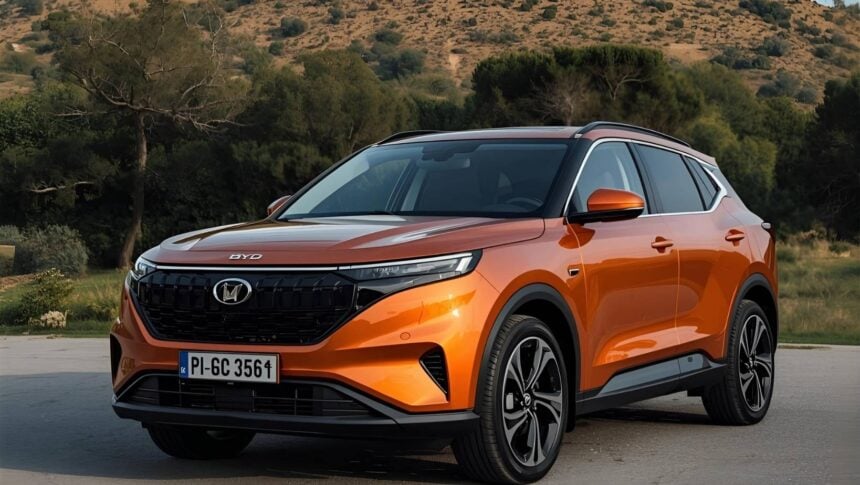
China’s BYD is quietly changing the rules for electric vehicles in Spain. Customers are finding models that are much cheaper than those of major European competitors and, most importantly, they don’t have to wait long like they did last year.
Dealers say the company’s pitch is simple: lower upfront cost, quick delivery, and a full range of cars, from small battery-powered cars to plug-in hybrids for people who aren’t ready to go all electric yet.
The dealers and price sheets show that BYD’s plug-in hybrid Seal U DM-i usually costs around 30,000 euros after public incentives, depending on the trim and region.
According to Reuters, the brand’s sticker prices can be up to 10,000 euros lower than those of similar European models. The Seal U DM-i has become Spain’s most popular PHEV this year, showing that many families still want gasoline backup for road trips while charging catches up in smaller cities.
The combination of price and usefulness is helping the brand gain market share in a market where hybrids are the norm for many first-time electric car buyers.

According to dealer groups and local news, BYD’s Spanish network has grown from a few dozen stores last year to almost 100 stores.
The company started in Spain with well-known distributors Astara, Quadis, and Caetano. They set up immediate after-sales service in Madrid and Barcelona and then moved to regional capitals. Financing has followed.
CA Auto Bank, which works with BYD in Spain and Italy, said in an April 2024 statement that it would “provide all financial services for vehicle purchases” throughout the network.
More Read

This would give the new company the kind of deals that Spanish buyers expect.
That matters in a country where monthly payments often matter more than list prices when it comes to buying a car.
Pricing and policy there are also tailwinds that are shaping the runway. Spain’s MOVES III subsidies, which will last until the end of 2025 and apply to purchases made after January 1, help lower the price of qualifying battery-electric and plug-in cars by thousands of dollars.
The program’s rules can be hard to understand, and the amount of money available varies by region, but the main effect is clear in the registration data.
According to the industry group ANFAC, electrified models have been getting more popular over the summer. Battery-electric cars are getting close to a double digit monthly share, and plug-in hybrids are still a good option for buyers who can’t charge their cars at home.
That demand profile fits perfectly with BYD’s wide range of models and its willingness to offer low prices at the entry level.

The European Commission’s final countervailing duties on battery-electric vehicles made in China set BYD’s rate at 17% on top of the EU’s 10% car tariff.
The rule only applies to BEVs, not plug-in hybrids. This is one reason why Chinese brands have focused on PHEVs in the short term while they set up factories in China.
Even with the tariff, BYD’s battery cars are still much cheaper in Spain than similar cars, which shows how the company’s costs are structured from batteries to electronics and how its supply chain benefits from being big. This position has gotten stronger even though China is slowing down.
The company has said it wants to make things in Europe in about three years, which would lessen the effects of tariffs and make prices more stable across the region.
There is no one brand of passenger cars that is the most popular in the country. Dealers are open to carrying multiple brands, and customers are price sensitive.
That makes it a good place for challengers who can offer a modern spec at a price that families can afford.
European groups are responding with new small EVs and sharper finance offers, but the competitive math is shifting as long as BYD can keep inventories flowing and retain its cost advantage.
Three things that investors and people who work in the industry should keep an eye on are
First, how reliably Madrid and the regions fund EV incentives through the end of the year, since delays can stop orders.
Second, if BEV’s share price stays high as more models that cost between 25,000 and 30,000 euros come out.
Third, the speed of dealer rollout and the quality of service will decide if early buyers come back for more.
Spain is likely to remain one of BYD’s most important test beds in Europe for all three.