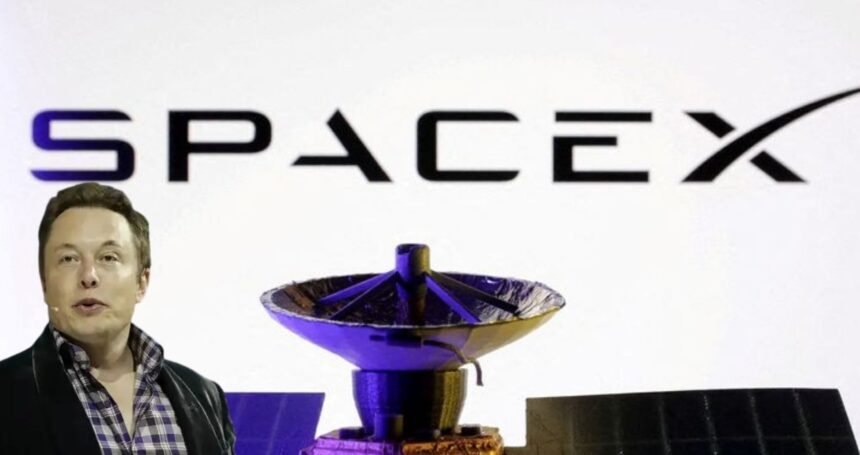
SpaceX is in talks to launch a new secondary share sale that could value the private space company at about $800 billion, according to media reports citing people familiar with the discussions.
This figure would roughly double the roughly $400 billion valuation from a recent share sale and would make SpaceX the most valuable privately held company in the world, ahead of OpenAI’s estimated $500 billion mark.
It would allow existing investors and employees to sell some of their holdings to new buyers in the private market, a tool the company has used repeatedly to provide liquidity while staying out of the glare of public markets.
Over the past several years, SpaceX has regularly organised such secondary sales so early backers and staff can cash out a portion of their stakes.
According to reports, SpaceX chief financial officer Bret Johnsen recently briefed investors on the potential share sale, while details such as exact pricing and size remain in flux.
The insiders have discussed a per share price around $300 which would imply a value closer to $560 billion, underscoring how tentative private market price tags can be until deals are finalised.
The new round of liquidity comes as SpaceX edges closer to a long awaited stock market debut. Importantly, the listing under discussion would cover the entire company including Starlink, SpaceX’s rapidly growing satellite internet unit, reversing earlier talk of spinning Starlink off on its own once its revenue had stabilised.
Elon Musk said earlier this year that SpaceX is on track to generate about US$15.5 billion in revenue in 2025, with roughly US$1.1 billion coming from NASA contracts and the rest driven largely by commercial launch services and Starlink subscriptions.
More Read

This would represent a steep climb from revenue estimates for 2024 and highlights how much of the company’s growth story now comes from communications rather than pure launch activity.
Even so, an $800 billion valuation would leave SpaceX trading on private market multiples that dwarf most listed aerospace and telecom peers.
MarketWatch has noted that at that level the company would be worth more than half of Tesla’s roughly US$1.4 trillion market capitalisation while generating only about one sixth of Tesla’s forecast revenue.
Analysts cited in that report estimate that Starlink alone could bring in more than US$8 billion in revenue this year, underscoring the premium investors are placing on the satellite network’s long term potential.
The prospective deal also sharpens the emerging rivalry between SpaceX and OpenAI in private valuations. Both firms sit at the centre of powerful secular themes, from reusable rockets and low Earth orbit broadband to generative artificial intelligence.
If SpaceX ultimately clears an $800 billion mark in this sale or in future transactions, it would reclaim the informal crown of the world’s most valuable start-up and signal that late stage private capital remains willing to pay up for dominant tech platforms despite a more cautious environment for traditional venture funding.

SpaceX has no public ticker, and its shares trade only through negotiated private deals. A small group of crossover vehicles and niche funds have built positions in SpaceX through special purpose vehicles, giving their unitholders indirect exposure but at the cost of extra fees and a layer of valuation uncertainty.
Secondary sales like the one SpaceX is exploring can deliver life changing liquidity to early employees and long-term backers, while giving new investors a chance to join the story before any IPO.
At the same time, prices are set in relatively thin, infrequent trades rather than in the continuous price discovery of a stock exchange.
Private rivals including Jeff Bezos’s Blue Origin are also investing heavily in rockets, lunar missions and satellite networks turning space into one of the most capital intensive battlegrounds in technology.
An $800 billion price tag would signal that investors expect SpaceX to remain at the centre of that emerging ecosystem for years to come, even if the exact number on today’s share certificates is still subject to negotiation.