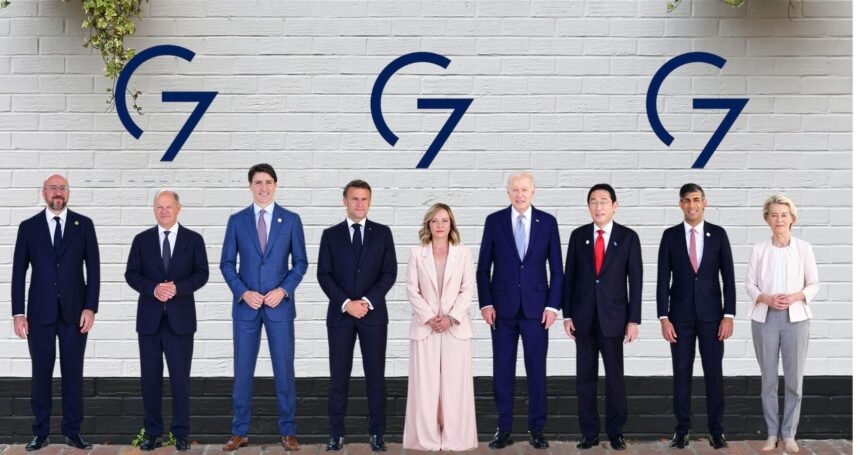
Canada used its G7 presidency to get a new set of energy and innovation measures together.
At the end of a two-day ministerial in Toronto on October 31, they made new statements about supply chains, grids, and the technologies that will power data centres and heavy industry.
Ottawa said that ministers moved forward on three important issues:- critical minerals, using artificial intelligence in the energy system, and making energy security stronger for both gas and electricity.
The main focus is the G7 Call to Action on Improving Energy Security.
It defines security in terms of three pillars:- diversification, predictability, and international cooperation.
More Read

It also focuses on chokepoints that have caused problems in markets since Russia invaded Ukraine and recently limited exports of key inputs.
The text says that members must strengthen gas and power systems, make it easier to get permits for building new grids, and create market tools that make things more clear. The statement was supported by Australia, South Korea, and Ukraine.
The ministers also agreed to a Roadmap to Promote Standards based Markets for Critical Minerals, which are the raw materials that batteries, power electronics, and defence technologies depend on.
More Read

The roadmap suggests traceability, aligned standards, and the use of sovereign tools to fight non-market practices.
It also shows a willingness to look into ways to unlock investment, such as price floors and offtake coordination. It makes it clear that the work is connected to what leaders said at the Kananaskis summit in June.
The group agreed on an Energy and AI Work Plan to address two problems that are becoming more and more intertwined.
The first question is how to reliably and affordably meet the growing electricity needs of data centres.
The second is how to use AI to make the grid work better, as long as it doesn’t slow down, and to speed up the discovery of new materials.
The plan says that utilities need more capacity, storage, smarter demand response, and safe baseload options. It also says that utilities should share data on non-commercial use cases and train workers first to build digital skills across the board.
More Read

A different ministerial statement says that nuclear power is a non emitting baseload option for countries that want to use it and promises to work together on fuels and supply chains.
It talks about small modular and advanced reactors, promises to follow the highest safety, security, and non-proliferation standards, and lays out guidelines for responsible waste management.
The statement also encourages more work together on fusion, such as making sure that regulations are in line and getting the IAEA involved as the first projects reach maturity.
Canada said that G7 work on important minerals now includes 26 new investments and partnerships that will help unlock $6.4 billion in projects.
There is also up to $20.2 million for international research collaborations. Ottawa also sped up the last part of a $70 million donation to the Ukraine Energy Support Fund.
This included a $10 million payment to fix grid assets that were damaged by Russian attacks. Canada announced $5 million for Nano One to make LFP battery materials bigger and $11 million for technologies that use and store carbon.
Tim Hodgson, Canada’s energy minister, said that the G7 was going back to its roots.
He said in a statement, “We are now called to the same task of anchoring a rules-based, market-driven, and democratic order.”
The Chair’s Summary made that point even more clear by talking about building out grids and transmission lines for a digital economy, pushing the Critical Minerals Production Alliance to work together, and continuing to support Ukraine’s energy system.