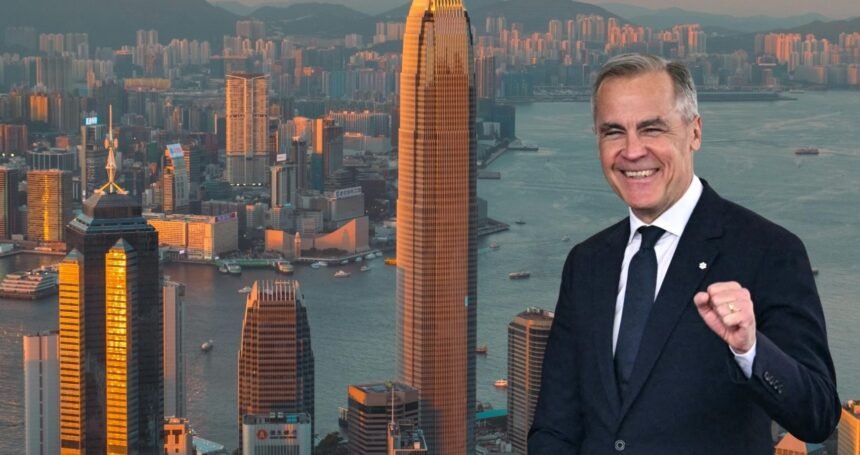
On Saturday, Prime Minister Mark Carney ended his first trip to the Indo Pacific with a series of trade and security steps that give Canada a stronger presence in the area and show that Canada is moving away from relying on the United States more quickly.
Carney said that Canada wants to double its non-U.S. exports over the next ten years in Gyeongju, South Korea. He also said that Canada would host the Asia Pacific Economic Cooperation summit in 2029.
Ottawa announced a new Security and Defence Cooperation Partnership with South Korea. This is the first time Canada has done something like this in the Indo Pacific.
The framework calls for regular talks between ministers, joint training and exercises, more cooperation between defence industries, and more work on cyber, space, and hybrid threats.
The two countries also finished talks on a General Security of Information Agreement that would let them share and buy information safely.
More Read
Canada and Thailand agreed to start talks on a free trade agreement between the two countries and to speed up work on a Canada ASEAN agreement that is supposed to be ready by 2026.
Carney and Chilean President Gabriel Boric signed a new Strategic Partnership Framework in a different meeting. This framework focuses on working together in important minerals, clean energy, and digital technologies.
Officials were told to act quickly to settle trade disputes that have been holding back business, such as issues with canola, seafood, and electric vehicles.
More Read

Xi asked Carney to come to China at a time that worked for both of them. This would open up high level channels for longer.
Carney pushed for more investment in Canada and visited PSA International, which runs some of the busiest ports in the world and has invested in Canadian terminals.
Singapore will still be Canada’s biggest source of foreign direct investment from South-east Asia in 2024, with $7.8 billion. This is why Ottawa sees the city state as a capital hub for the region.
TCarney met with Korean business leaders to talk about AI, quantum computing, critical minerals, and energy as areas of growth.
He also said that Team Canada would go to Korea for a trade mission in 2026. After visiting Germany’s TKMS yard in August, he also went to Hanwha Ocean’s Geoje shipyard, which was a finalist in Ottawa’s patrol submarine programme.
More than 60% of the world’s GDP and almost half of all trade comes from APEC economies.
More Read
The bloc is home to four of Canada’s top five trading partners and makes up 84% of the country’s trade, making it a natural place for Ottawa to try to diversify its economy.
Carney said in a news release, “The world is changing quickly, and Canada needs to put a lot of faith in its people, its ideas, and its future.”